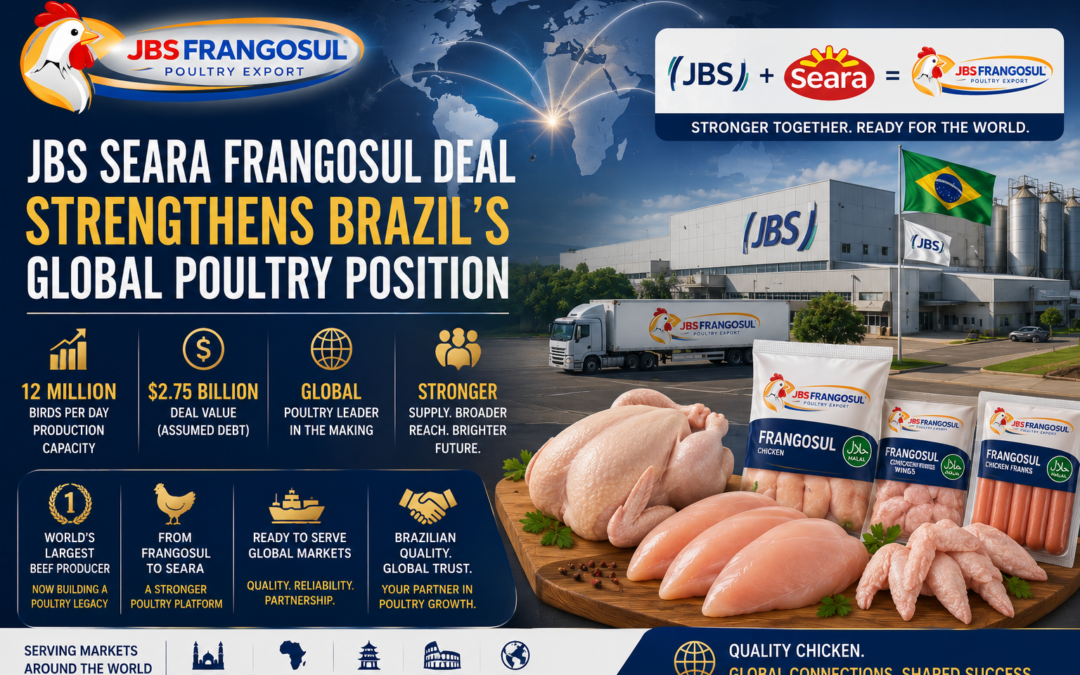
Brazilian meat producer JBS has taken another major step in the global poultry industry with its agreement to acquire Seara Foods, the poultry and pork unit of Marfrig Alimentos. The deal, valued at around $2.75 billion in assumed debt, is expected to significantly expand JBS’s position in poultry, processed foods, and international protein markets.
Already known as the world’s largest beef producer, JBS has been building a stronger presence in chicken and processed foods. With this acquisition, the company aims to become a global leader in poultry while also strengthening its position in Brazil’s competitive food market.
A Major Poultry Expansion for JBS
The acquisition of Seara Brasil is expected to add major scale to JBS’s poultry operations. According to the company, the deal could generate around 10 billion reais in additional annual revenue and increase poultry production capacity to approximately 12 million birds per day.
This expansion is important because poultry remains one of the fastest-moving protein categories in global trade. Demand continues to grow for reliable frozen chicken products, including whole chicken, chicken cuts, processed poultry, and export-ready products for retail, wholesale, and food service buyers.
For customers looking for Brazilian poultry supply, frangosul chicken brazil remains an important keyword connected to quality, export capacity, and trusted Brazilian chicken sourcing.
From Frangosul to Seara: Building a Poultry Platform
JBS first entered the Brazilian poultry market in 2012 through a lease agreement involving Frangosul assets, the Brazilian operation previously linked to French poultry company Doux. That move helped JBS strengthen its poultry export strategy and gave the company a stronger platform in the Brazilian chicken sector.
The Seara deal takes that strategy further. While the Frangosul transaction was strongly connected to export growth, the Seara acquisition adds scale in poultry, pork, processed foods, and domestic distribution.
Together, these moves show how jbs seara frangosul has become an important part of JBS’s wider poultry growth story, connecting Brazilian production strength with international market demand.
Processed Foods and Poultry Leadership
JBS CEO Wesley Batista said the acquisition would help turn JBS into the No. 2 processed foods company in Brazil and support its ambition to become a global poultry leader. Even after the acquisition, JBS would continue to compete with major Brazilian food companies in the domestic processed foods market.
The deal also complements JBS’s international poultry operations. In the United States, JBS already owns Pilgrim’s Pride, a major poultry producer acquired in 2009. This means JBS is not only expanding in Brazil but also strengthening a wider international poultry network.
For buyers and distributors, this larger structure may support stronger supply reliability, wider product variety, and better access to different poultry categories such as Frangosul Chicken wings and other frozen chicken products.
Export Opportunities for Brazilian Chicken
Brazil is one of the world’s strongest poultry exporters, and JBS’s growing investment in poultry reinforces the country’s role in international chicken supply. The combination of Frangosul assets, Seara operations, and existing JBS poultry businesses creates a broader platform for serving global markets.
Export buyers often look for consistency, volume, food safety, and product flexibility. Brazilian chicken producers are well positioned to meet these needs because of their large production base, established export systems, and experience with different market requirements.
Product categories such as Frangosul Chicken franks may also support demand from processed food channels, wholesalers, and food-service buyers looking for convenient frozen poultry options.
Halal Poultry and International Market Demand
Another important part of Brazil’s poultry export success is its ability to serve halal markets. Many international buyers require halal-certified poultry products, especially in the Middle East, North Africa, and other Muslim-majority markets.
The demand for frangosul chicken halal reflects the importance of certified production, food safety, and export-ready supply. For global distributors, halal assurance can be a major factor when choosing a poultry supplier.
As JBS expands through the Seara acquisition, its larger production and processing network may strengthen its ability to serve markets that require consistent halal chicken supply.
What the Seara Deal Means for JBS
The Seara acquisition gives JBS a stronger position across several areas:
It expands poultry production capacity, strengthens processed food operations, adds major annual revenue potential, and supports the company’s ambition to become a leading global poultry producer.
However, the sale of Seara Brasil does not include certain overseas assets such as Keystone and Moy Park, which were part of the broader Seara Foods structure. This means the deal is mainly focused on the Brazilian poultry and pork unit.
Even with that limitation, the transaction remains a major poultry move for JBS and a significant development in Brazil’s protein industry.
Conclusion
The JBS acquisition of Seara Foods marks a major step in the company’s poultry growth strategy. After entering Brazilian poultry through Frangosul assets, JBS is now expanding further with a deal that increases production scale, processed food strength, and global poultry ambitions.
For international buyers, the growth of JBS Seara Frangosul highlights Brazil’s continued importance as a trusted poultry supplier. With rising demand for frozen chicken, halal poultry, chicken wings, chicken franks, and other export-ready products, JBS is positioning itself as one of the most important names in the global chicken industry.